The Dolomites in October: Larch Gold, First Snow and Where to Shoot
October is the best month to photograph the Dolomites and the shortest window to get right. For about three weeks the larches turn gold across the slopes, the first snow dusts everything above 2,500 metres while the meadows are still green, and the summer crowds have gone. Then the lifts stop, the huts close, and the range shuts down until the ski season. Here is what October actually looks like up there, which locations still work, and the closures that catch people out.
Real shots from Dolomites
What October actually looks like
The larch is the only conifer in Europe that drops its needles, and it is the reason the Dolomites have an autumn at all. Between roughly the tenth and the twenty-fifth of October the larch belt at 1,700 to 2,000 metres goes from green to a deep, saturated gold, in bands that follow the contour lines. Higher up there are no trees, so the peaks stay pale grey; lower down the valleys are still summer green. Three colours stacked in one frame, which is what makes October photographs of this range instantly recognisable.
Snow is the other variable: the first proper falls above 2,500 metres usually arrive during the month. A dusting on the towers, gold larch below and green meadow beneath that is the best combination the Dolomites produce all year — and it lasts days, not a season.
The light works differently from anywhere else in Italy. Official sunrise is not when the sun reaches you: in a valley ringed by 3,000-metre walls it clears the ridge forty-five to ninety minutes later, and drops behind the opposite ridge just as early. Plan by the ridge, not the almanac. Mornings are cold — below freezing at altitude is normal in the second half of the month — and the air is exceptionally clear once the summer haze has gone.
Alpe di Siusi and Seceda: two summits without a hike
Alpe di Siusi is the largest high meadow in Europe, rolling for kilometres with the Sassolungo and Sassopiatto behind it. Wooden hay barns and single larches break it up, so you can put people almost anywhere on it and still have a mountain wall behind them with no fence, road or queue in the frame. In the second half of October the scattered larches are the whole point.
The road up from Siusi is closed to private cars during the day, so the cable cars decide everything: from Ortisei or Siusi, about fifteen minutes up, with a first departure and a last descent that change between summer and winter timetables. Check both before planning anything. To have the meadow genuinely empty, stay overnight at Compatsch and start before the first lift.
Seceda is the frame people recognise without knowing the name — a green slope tilting up to the left, the Odle blades dropping away vertically behind it. A cable car from Ortisei plus a gondola puts you at 2,500 metres in about twenty minutes, and the viewpoint is five minutes from the top station. Stand back from the edge and place a figure a third of the way up the grass; without someone for scale the wall is impossible to read.
Morning light comes from behind the ridge and rims it; the two hours before sunset put the sun on faces instead. It is exposed, often ten degrees colder than Ortisei, and cloud can close it in minutes — and walking down is a two-hour affair nobody plans for in good clothes. Check the last lift.
Lago di Braies and Tre Cime: water and rock
Lago di Braies is small enough to walk around in an hour, and every frame is the same three elements: green water, wooden rowing boats and the Croda del Becco closing the end of the valley. Autumn is its strongest season — fewer people, larch colour on the slopes, and mist sitting on the water in the first hour.
Before eight the water is still and the jetty is empty; by ten the car park is full and the path is a slow queue. Road access is regulated and the rules change year to year, so check rather than assume. Boat hire is seasonal and largely over by mid-October, and the jetty is private property — ask before setting up on it. The quieter frame is from the far shore, twenty minutes along the eastern path, where the boats become a detail rather than the subject.
Tre Cime di Lavaredo is the other end of the effort scale. The toll road ends at Rifugio Auronzo on the south side, where the three peaks read as one shape straight ahead. For the north face — the one on the posters — the path towards Rifugio Locatelli is about an hour each way: level ground, but an hour, at altitude, and worth agreeing in advance rather than discovering on the day. The rock goes copper in the last half hour of light on the south side and at first light on the north. The access road is seasonal, closing with the first serious snow and reopening in late spring, and the toll is per car. There is no shelter up there in a storm.
What clients say about this kind of shoot
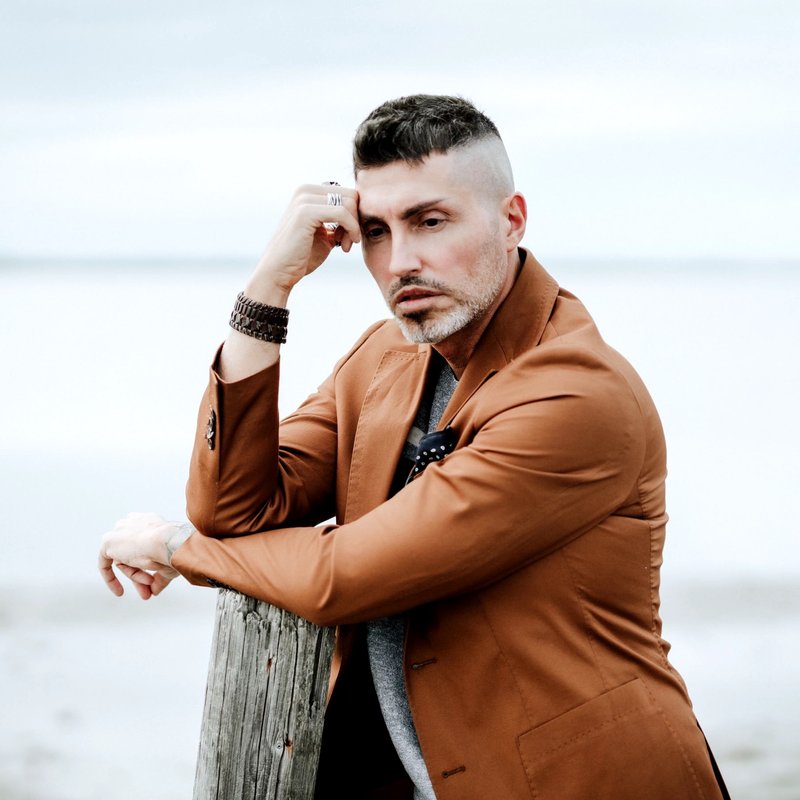
I contacted Marco to get a new profile picture. From our very first phone call, Marco was incredibly helpful and gave me advice and insights on how to achieve what I wanted. We met up to take the photos in some interesting urban settings; he was great at making me feel at ease and bringing out what I wanted to express through the photo. The shoot was quick but very productive, and the next day he sent me several high-quality photos that I’ll be able to use for various purposes. Highly recommended.
— Laurent C. on Brunetto Z.
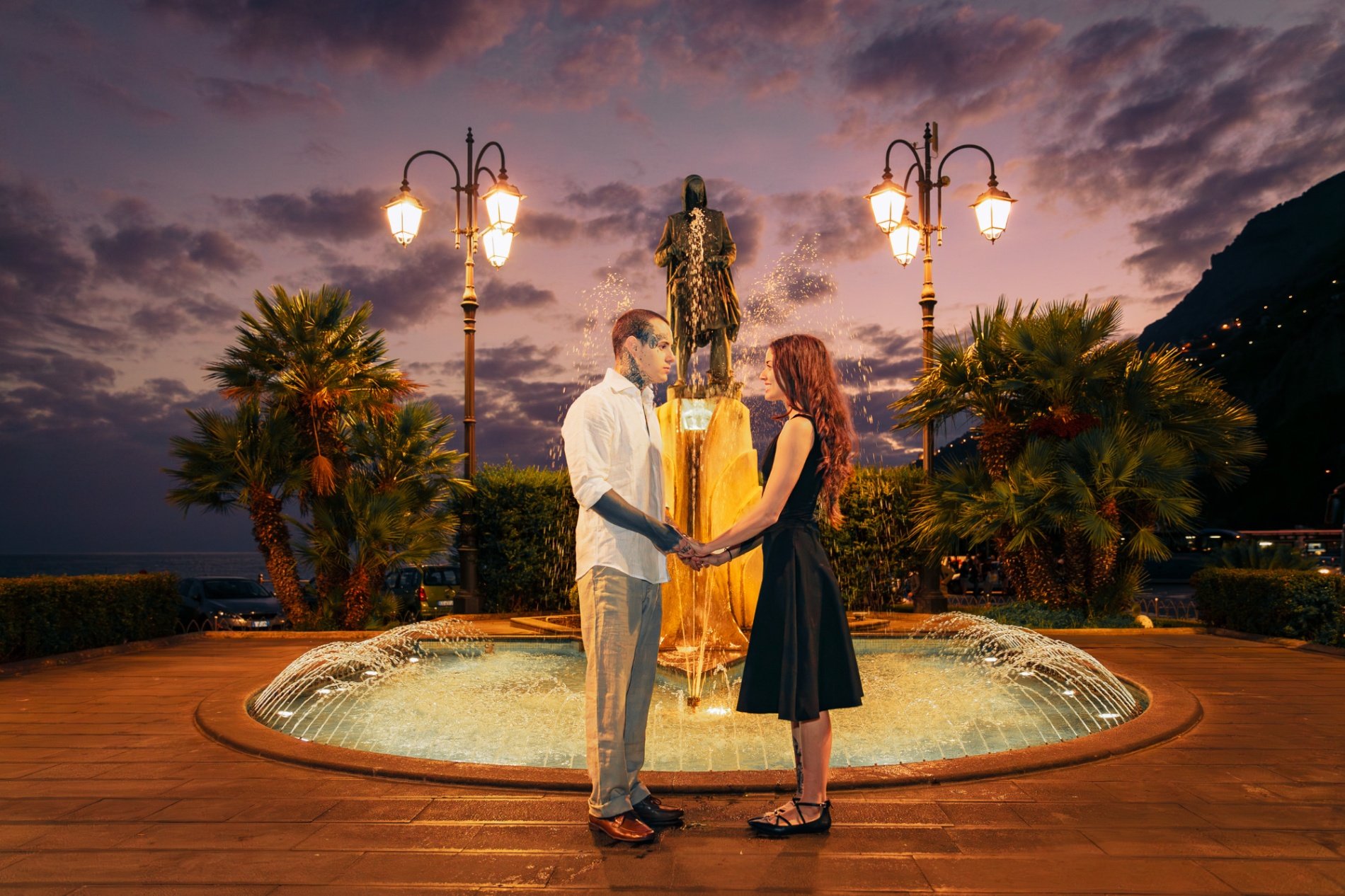
Hello Stefano! It's wonderful to hear from you! Thank you so much for making our big day so special and for getting such wonderful photos. We couldn't have asked for a better photographer! We appreciate you so much and hope that all is well for you. If we have any friends that are in need of a photographer we will definitely be recommending you to them! You are a great artist! All love to you!
— Sophia & Tanner on Stefano C.
The photoshoot with Brunetto was such an amazing experience from start to finish. Beyond his incredible creative eye and beautiful concepts, he made the entire photoshoot feel so natural, fun, and meaningful. Every shot was thoughtfully crafted, and you can truly see his passion and artistry in the final photos. What made the experience even more special was how the shoot turned into more than just taking pictures — it felt like an informative tour filled with stories, insights, and genuine conversations. By the end of the day, I didn’t just leave with beautiful photos, but also with a new friend. If you’re looking for a photographer who brings both talent and warmth into every moment, Brunetto is absolutely someone I would recommend.
— Je D. on Brunetto Z.
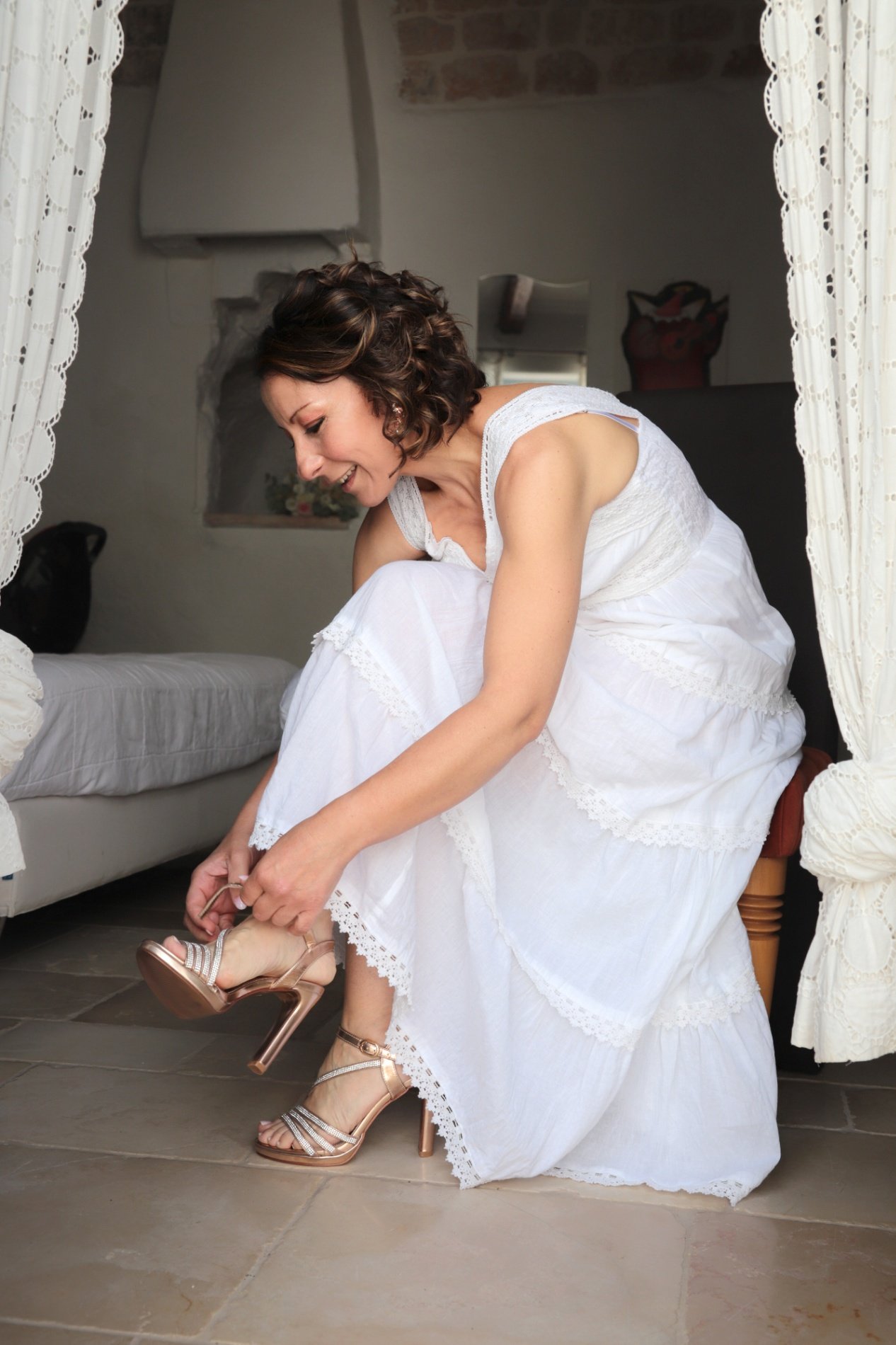
We're writing this review a little late, but the memories are still vivid. When we started looking for photographers for our wedding, we didn't have any clear ideas, but what was important to us was that that day, and us, would be captured as we truly were, certainly bringing out that fairytale atmosphere typical of a wedding, but with the real, genuine moments and emotions told and captured, without the need to construct or add anything beyond the beauty and joy that day gave us forever. They were able to do this: to tell our story and capture exactly what our wedding was, while at the same time being companions throughout the day, people we spent a lot of time with but, above all, had fun with, going beyond the simple couple/photographer relationship. We let them guide us, and what came out was a kind of happiness, mixed with madness, that tells the story of what was, for us, the most beautiful day. If, in your search for photographers, you are looking not only for someone who can create a beautiful photo album to look back on over time, but for a series of shots capable of making you remember what you experienced, we can only recommend turning to them.
— Riccardo on Brunetto Z.
A meticulous professional with an eye for detail, able to turn every photograph into a work of real beauty. Highly recommended.
— Erika C. on Stefano C.
He fully understood our needs, was helpful and punctual with regard to timing and the way the shoot was carried out, and we believe the quality of the photographs is excellent. Marco is an attentive, discreet and empathetic professional, qualities that also shine through in his photographs. We couldn't have found anyone better!
— Marco N. on Brunetto Z.
The between-season trap
This is the part that ruins October plans. Italian mountain infrastructure runs two seasons with a gap between them, and the gap falls exactly where the best colour is.
- Cable cars and gondolas in Val Gardena and Alpe di Siusi typically run into mid-October, then stop for maintenance and reopen for the winter in late November or December. Dates differ by lift and change every year.
- Rifugi — the mountain huts — are private businesses running a summer season that mostly ends in late September or early October. A hut that was your lunch plan may be shuttered. Ask before shooting on a terrace even when one is open.
- High passes and toll roads, including the Tre Cime road, close with the first serious snowfall rather than on a fixed date.
- Buses switch to reduced winter timetables, and the summer shuttle services stop.
None of this makes October a bad month; it makes it a month to book with a photographer who knows which lift is still turning that week. The Dolomites location page lists photographers based in the valleys.
What to wear and carry
Assume ten degrees colder at the top station than in the valley, and wind on any ridge. The formula that works is a warm layer that comes off for the frame and goes straight back on, thermals under anything thin, and real shoes — the grass on Seceda is steep and slippery when damp, and the Braies path is loose stone.
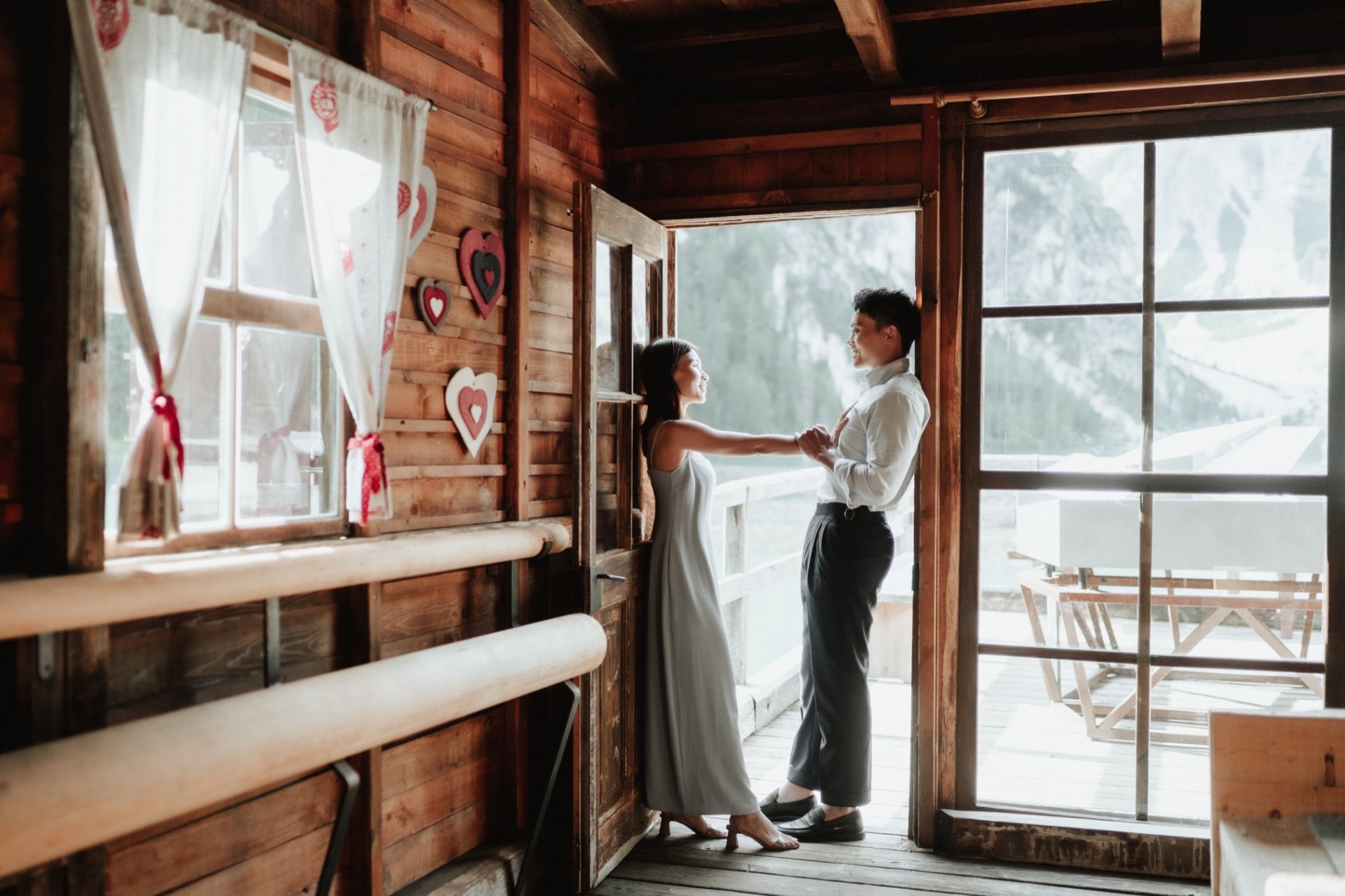
Long dresses photograph beautifully up here and are genuinely cold: a coat between shots and only a few minutes of exposure at a time. Colour matters more than usual — against gold larch and grey rock, deep green, rust, cream and navy separate well, while pale grey disappears. The what to wear guide has the general version.
Book it
Most sessions here are couples, engagements and elopements, because the landscape rewards two people and a lot of empty space. Start on the Dolomites elopement page or the couples page; a surprise is on the Dolomites proposal page.
Quick Booking starts from €405 for one hour and €610 for two. Two hours is the sensible choice here — the cable car alone eats half an hour each way. A photographer is assigned within 24 hours of booking and the edited gallery normally arrives about a week later. Wider lists are on the elopement and couples pages and in the photographers directory.
If you are combining the mountains with something softer, Lake Garda is two hours south and several degrees warmer, and Verona is the nearest city worth a second day. For the other half of the Italian autumn, see autumn in Tuscany and the Val d'Orcia, and for the comparison across regions, where to elope in Italy.
Frequently asked questions
When exactly do the larches turn gold?
Usually between about the tenth and the twenty-fifth of October, and altitude decides the order: the belt around 1,700 to 2,000 metres colours first, and lower slopes follow. It varies by a week either way depending on the summer, so the safest plan is the middle two weeks of the month. A cold snap accelerates it and a warm, wet autumn drags it out.
Are the cable cars still running in October?
Usually into the middle of the month, and then not. Most Val Gardena and Alpe di Siusi lifts close after the summer season for maintenance and reopen for winter in late November or December, and the exact dates differ by lift and change each year. This is the single most important thing to check before booking flights, because without the lift, Seceda and Alpe di Siusi both become long hikes.
Do we need to hike for the well-known viewpoints?
Not for most of them. Seceda's viewpoint is five minutes from the top station, Alpe di Siusi starts at the cable car, and Lago di Braies is level walking. Tre Cime is the exception: the toll road delivers you to the south side, but the classic north face is an hour each way on a level path. Agree that walk in advance, and pick footwear accordingly.
What happens if it snows during our session?
Fresh snow on the towers with gold larch below is the best combination the range produces, so a light fall is good news. What matters is access: passes and toll roads close with serious snowfall, and a lift can stop for wind. Book with a local photographer, keep the date flexible by a day where you can, and have a valley alternative agreed in advance.
Want professional photos in the Dolomites?
Browse portfolios, compare packages, and book a verified local photographer in minutes.