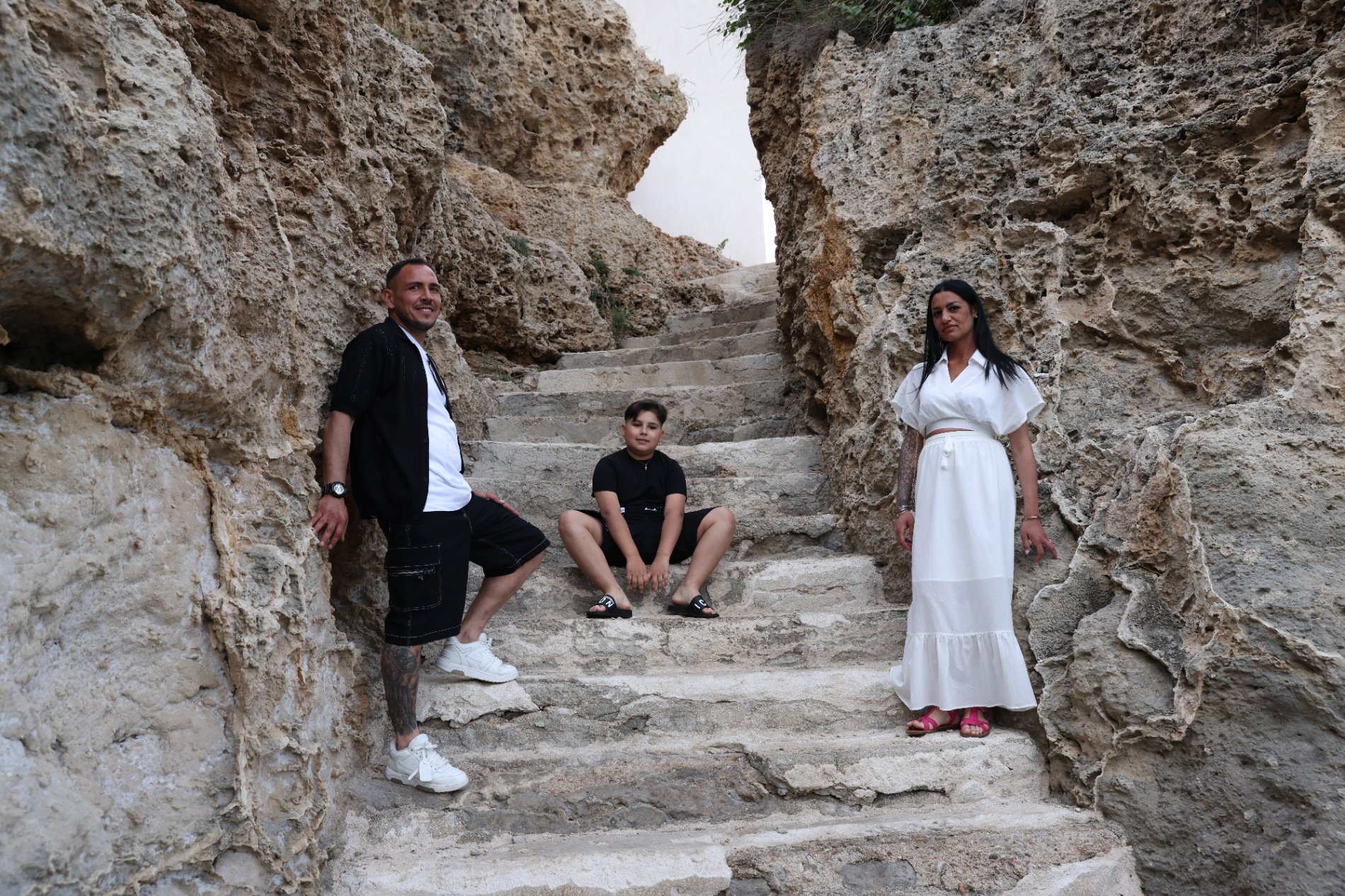
Photographing Puglia: Lecce and Alberobello
Lecce and Alberobello are the two places people mean when they say they want photographs in Puglia, and they are 110 kilometres and about an hour and a half of driving apart. Doing both in one day is possible and usually a mistake: you end up taking the worst light in each. Give each one its own morning or its own evening.
3 photo spots in Alberobello — click a pin to open the full guide
Real shots from Alberobello
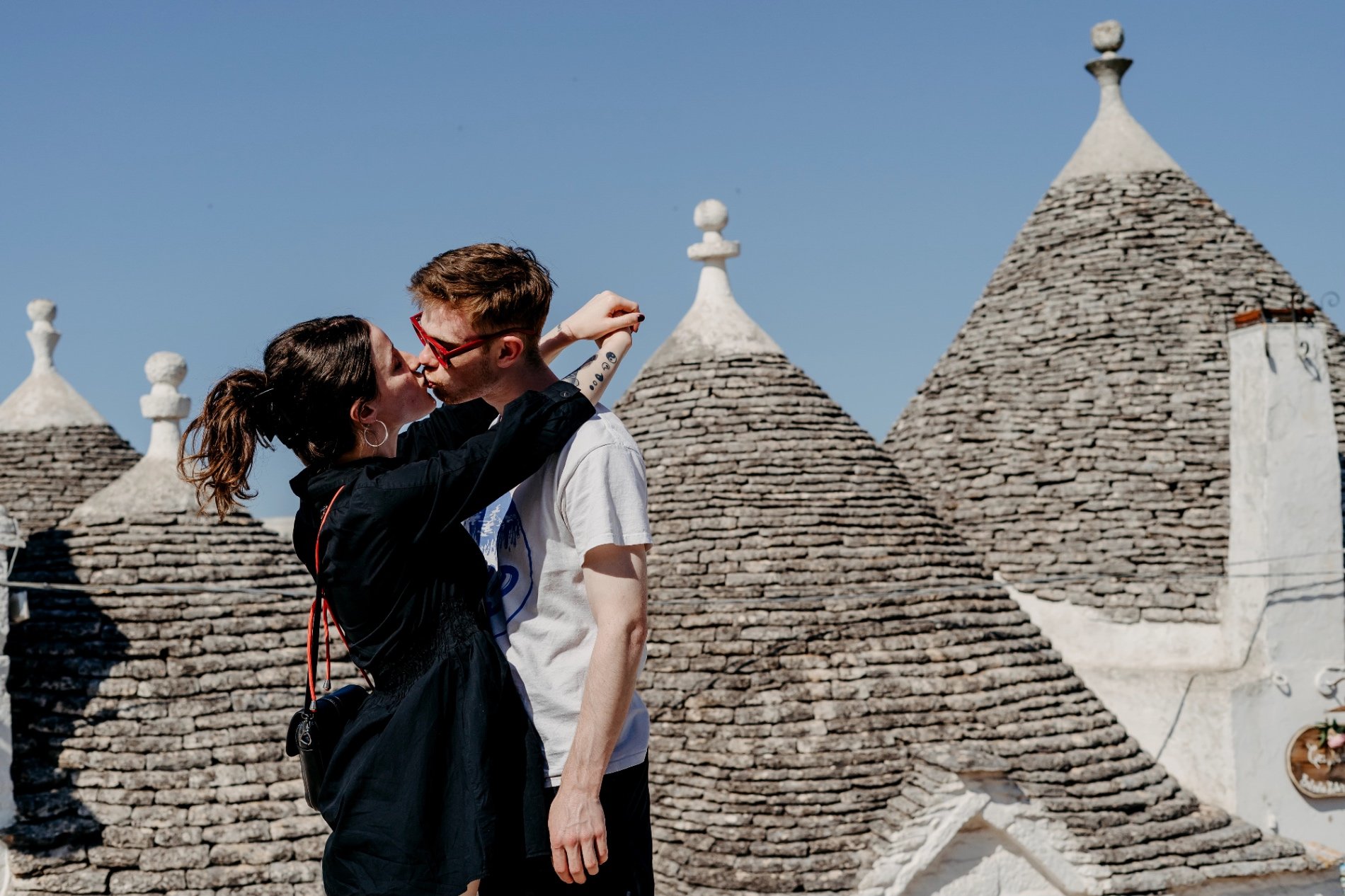
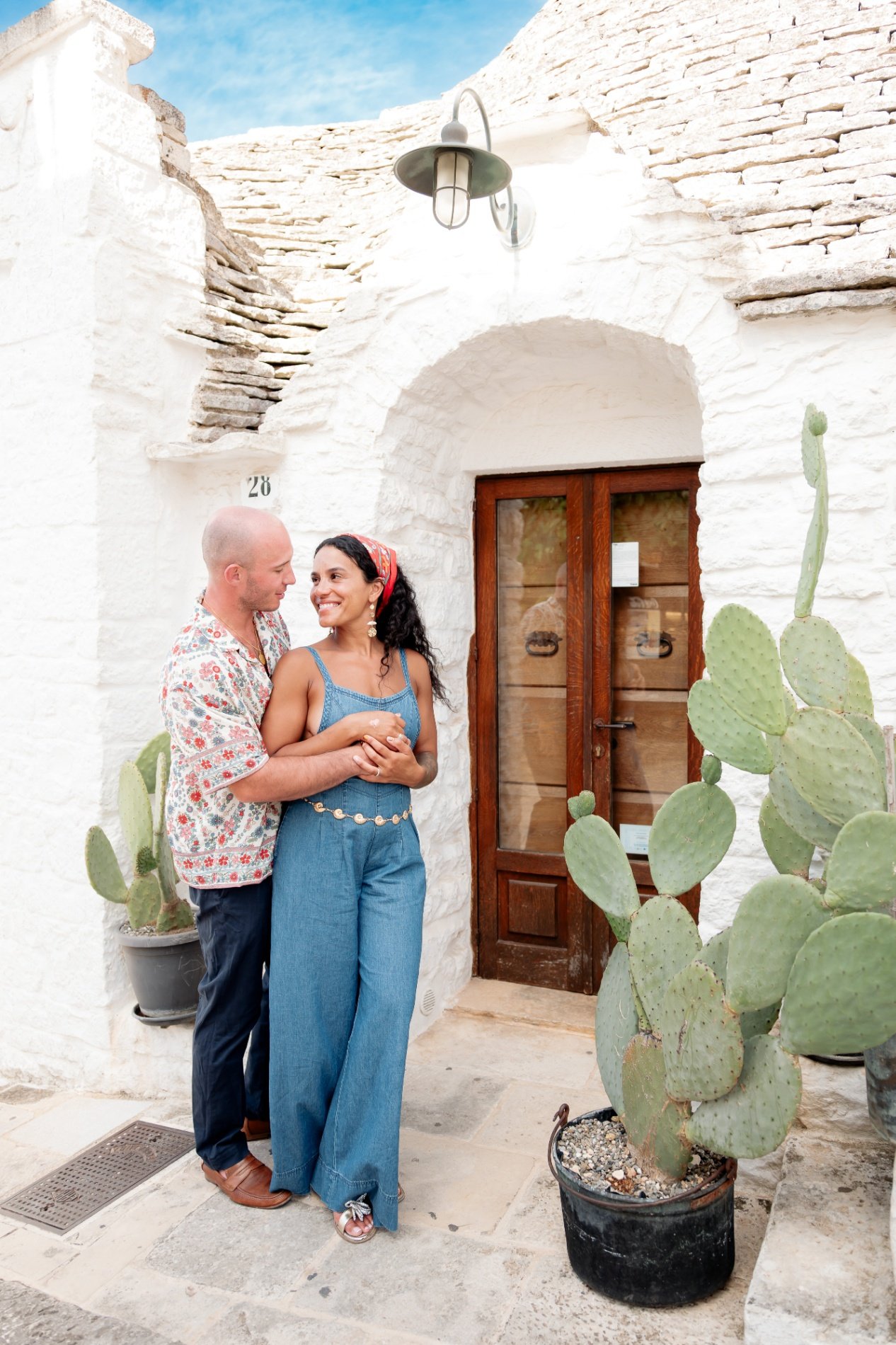
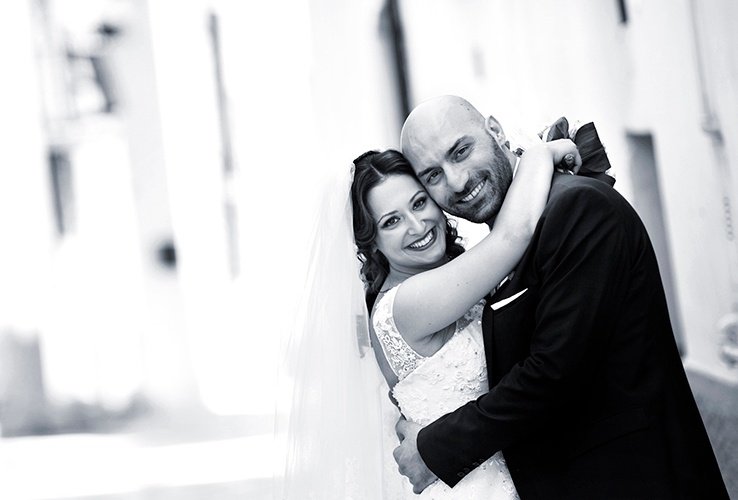
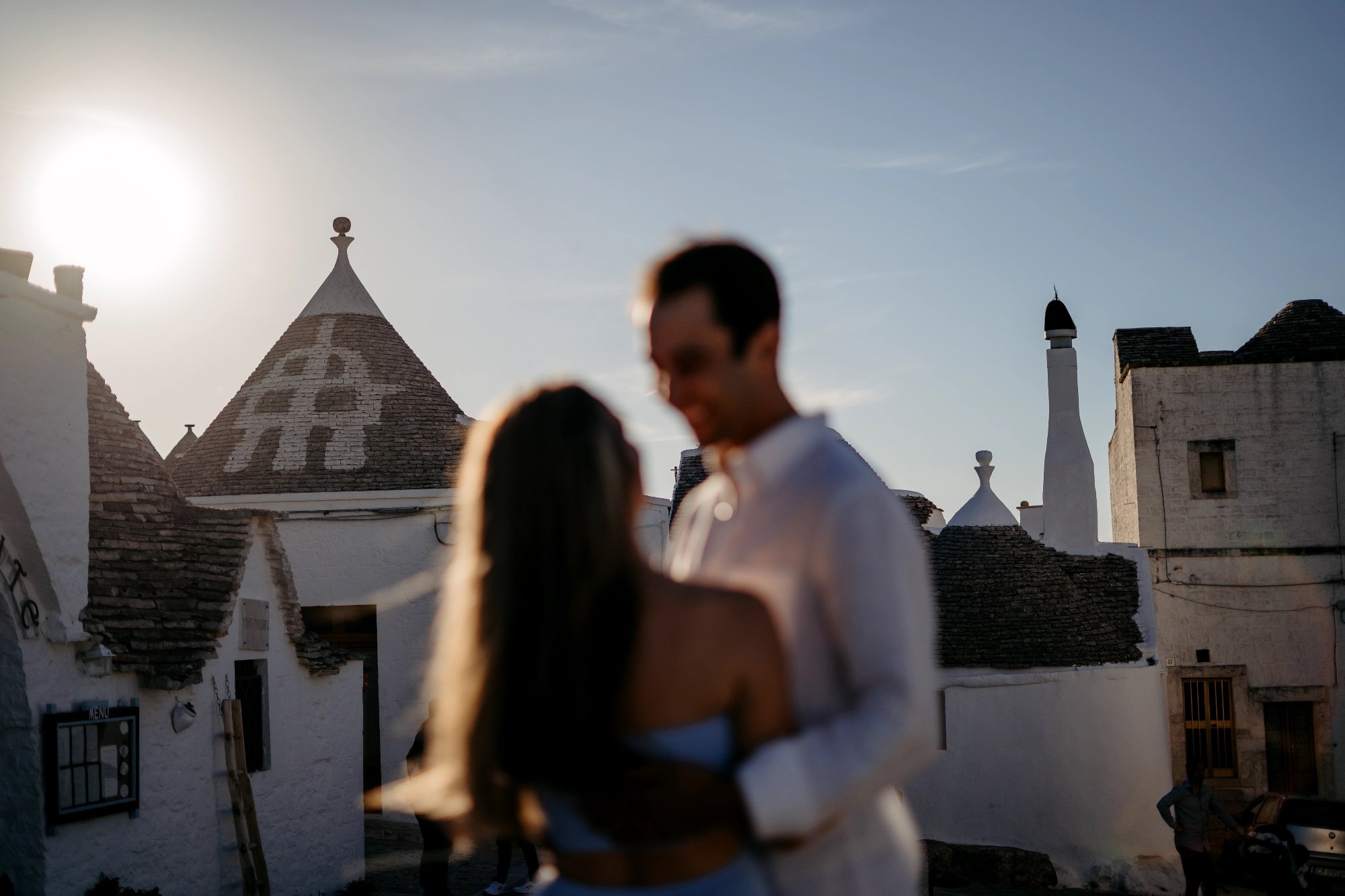
Lecce
The stone decides everything
The centre is cut from pietra leccese, a limestone soft enough when quarried to be worked like wood and hard enough afterwards to hold the detail for close to four hundred years. That is why the facade of Santa Croce looks like carved furniture rather than architecture.
What matters behind a camera is how it behaves with light. Low direct sun: sand turning to apricot, and every carved surface throwing its own small shadow, so the facades read three-dimensional. Overhead midday sun: flat, chalky, uninteresting. Overcast: grey and dead. In most Italian cities a cloudy day is a gift. In Lecce it is a lost day. Watch the forecast and move the session rather than shoot under cloud. Rain is worse still: the stone is porous, so it dries in patches for hours after the sky has cleared, and a half-wet facade cannot be rescued afterwards.
Piazza del Duomo is the reason to stay for the evening
Almost every Italian cathedral square is a crossroads. Lecce's is a room. The cathedral and its bell tower close one side, the bishop's palace and the seminary the others, and you come in through a single monumental gateway. No traffic, nobody cutting through on their way somewhere else. People behave differently inside it. They slow down, and that shows up in the frames.
After sunset the floodlights come up and the square turns into a stage. There is a window of roughly twenty minutes when the sky still holds blue and the stone is already warm and lit, and that is the picture. Wait longer and the sky goes black, contrast jumps, and you are left with a lit foreground under a hole. At f/1.8 to f/2 you do not need a tripod, and in a space that size you should not want one. The square itself is free and open at all hours; the cathedral, the crypt and the seventy-metre bell tower are ticketed and keep their own seasonal hours, which barely matters, because what you want is outside.
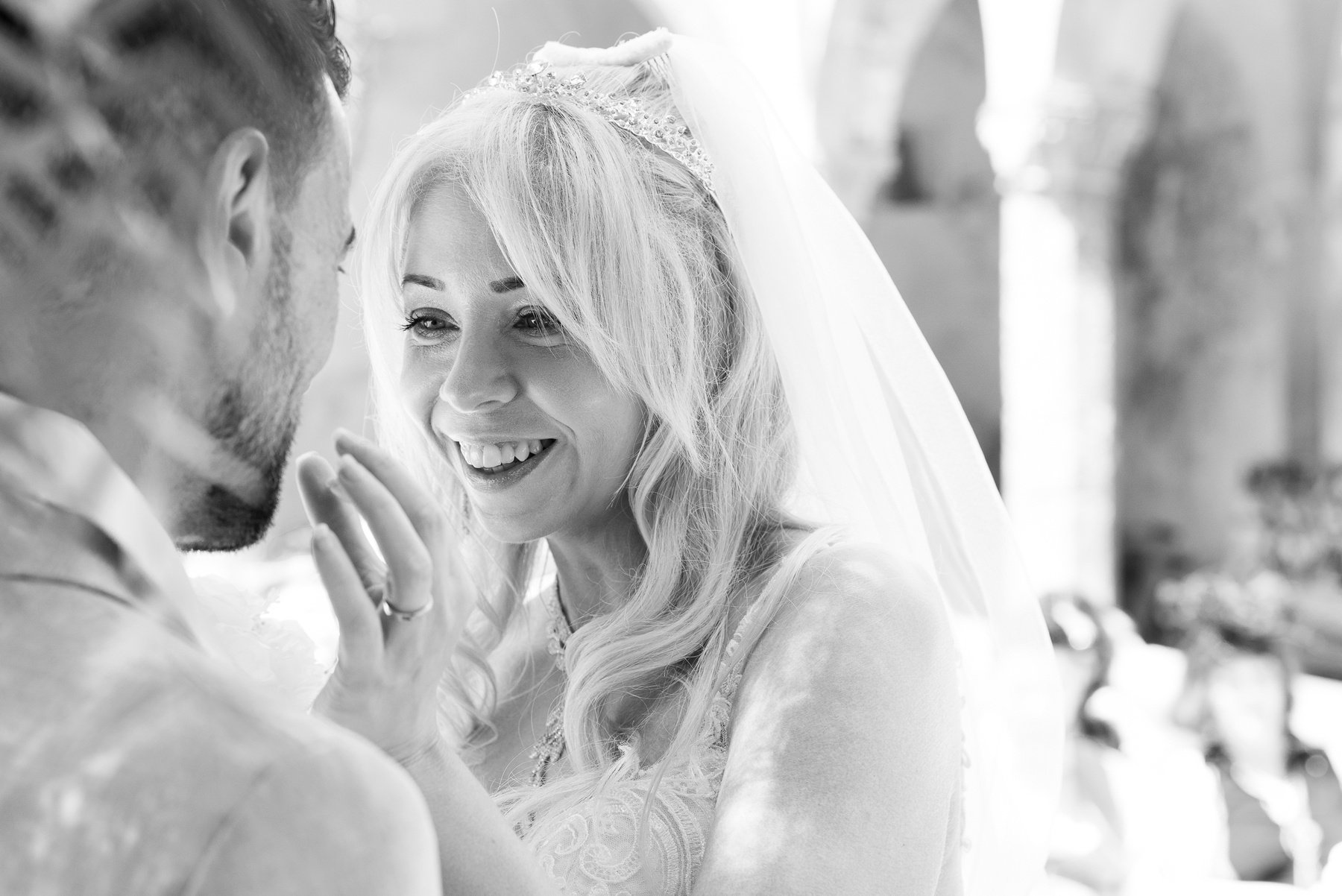
It is the best place in the city for couples, precisely because it is quiet enough that two people stop performing.
The amphitheatre in the middle of the main square
Piazza Sant'Oronzo has a second-century Roman amphitheatre sunk into the middle of it, found by accident during building work at the start of the last century and still only about a third excavated. The rest is under the surrounding buildings. You shoot down into it over the railing.
Mid-morning is the good hour: the sun has cleared the roofline on the eastern side and rakes across the tiers, so the steps separate instead of merging into one grey mass. From aperitivo onwards the square is the city's living room and it is genuinely full. Fine for reportage, hopeless for anything posed.
Two streets away, nobody
Lecce's centre is small. Fifteen minutes on foot covers all of it. Step off any of the piazzas and the city empties: Via Palmieri toward Porta Napoli, the lanes around San Matteo, the block behind the cathedral. Pale walls, dark green shutters, a parked scooter, no crowd. Before nine in the morning you will have most of it to yourself, and that is where sessions with family actually work, because children can move and nobody is being inconvenienced.
Arriving
The historic centre is a ZTL with camera-enforced gates. Leave the car outside the ring and walk in; nothing is far. Lecce is the southern terminus of the Adriatic mainline, so trains from Bari take about an hour and a half and there are direct services from Rome. Full detail on the city: Lecce.
Alberobello
Before nine, after six
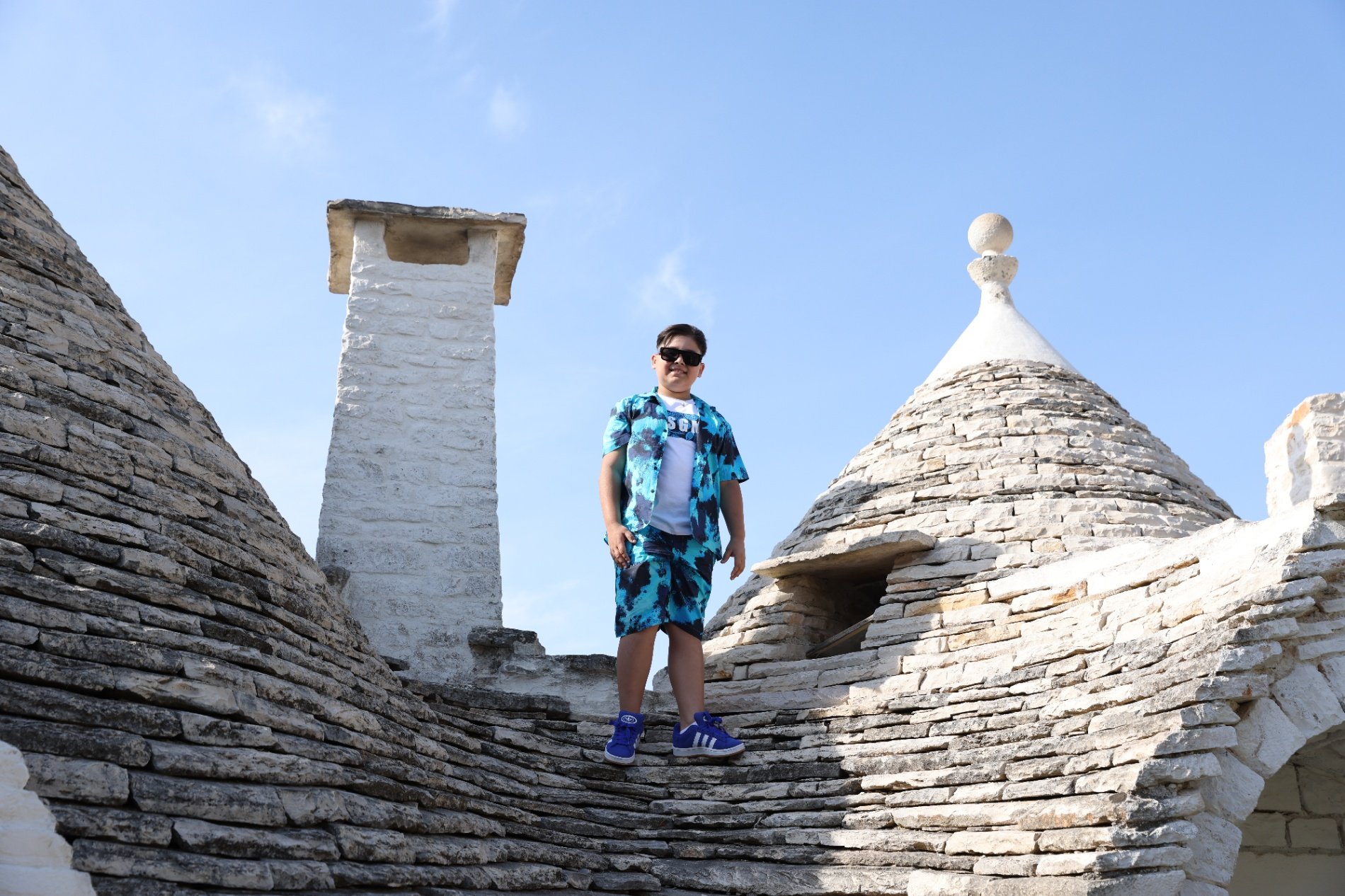
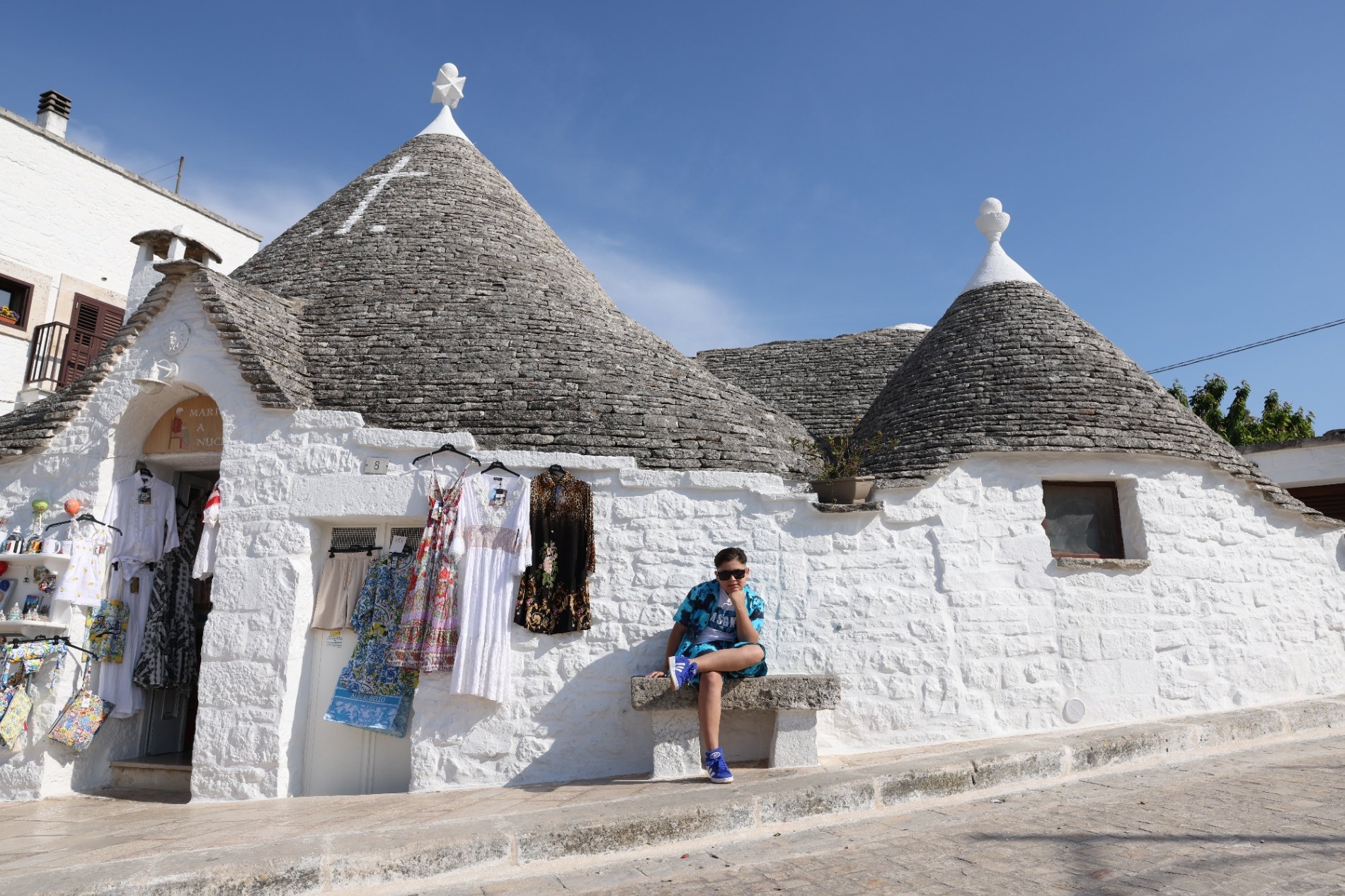
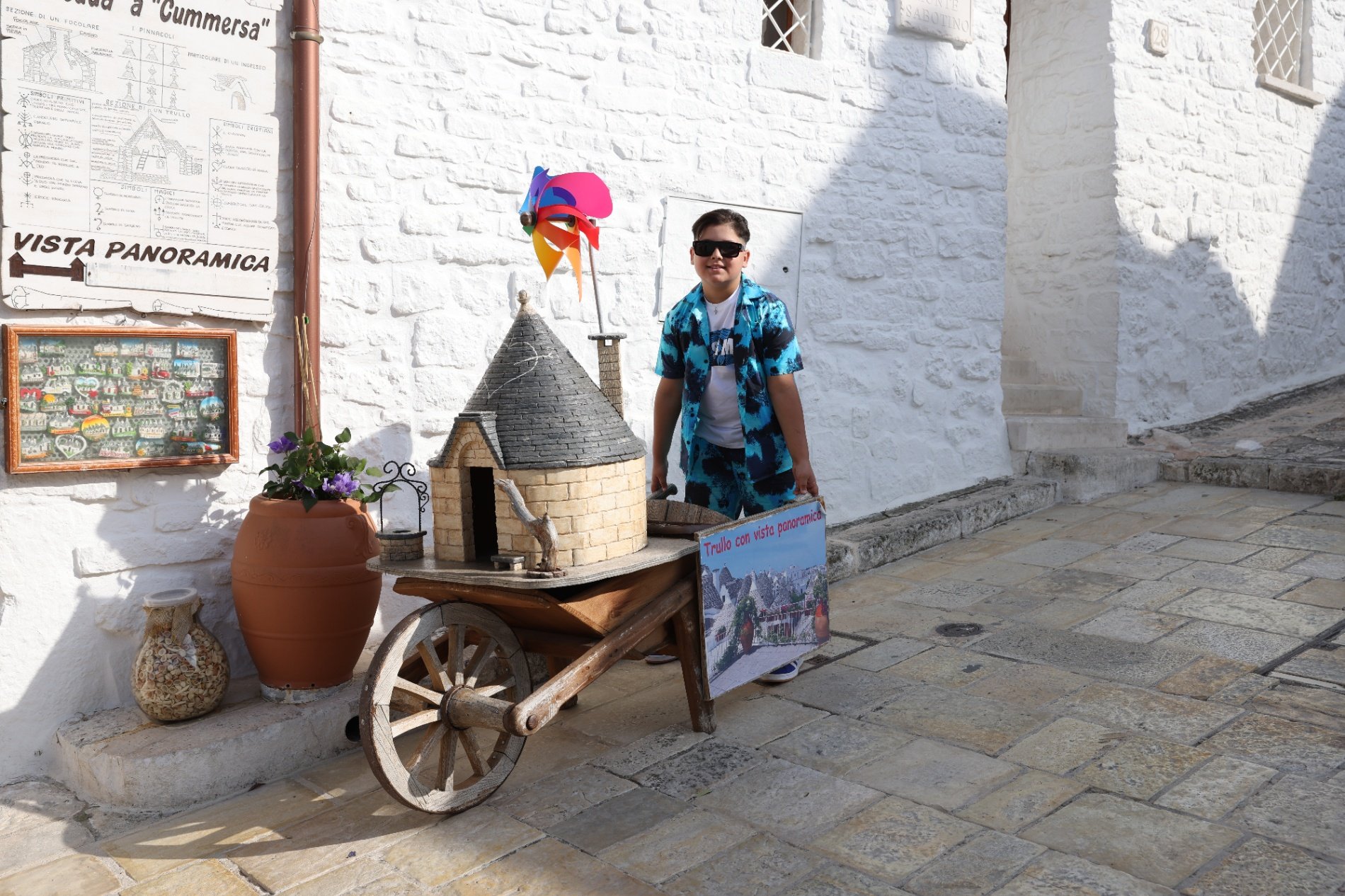
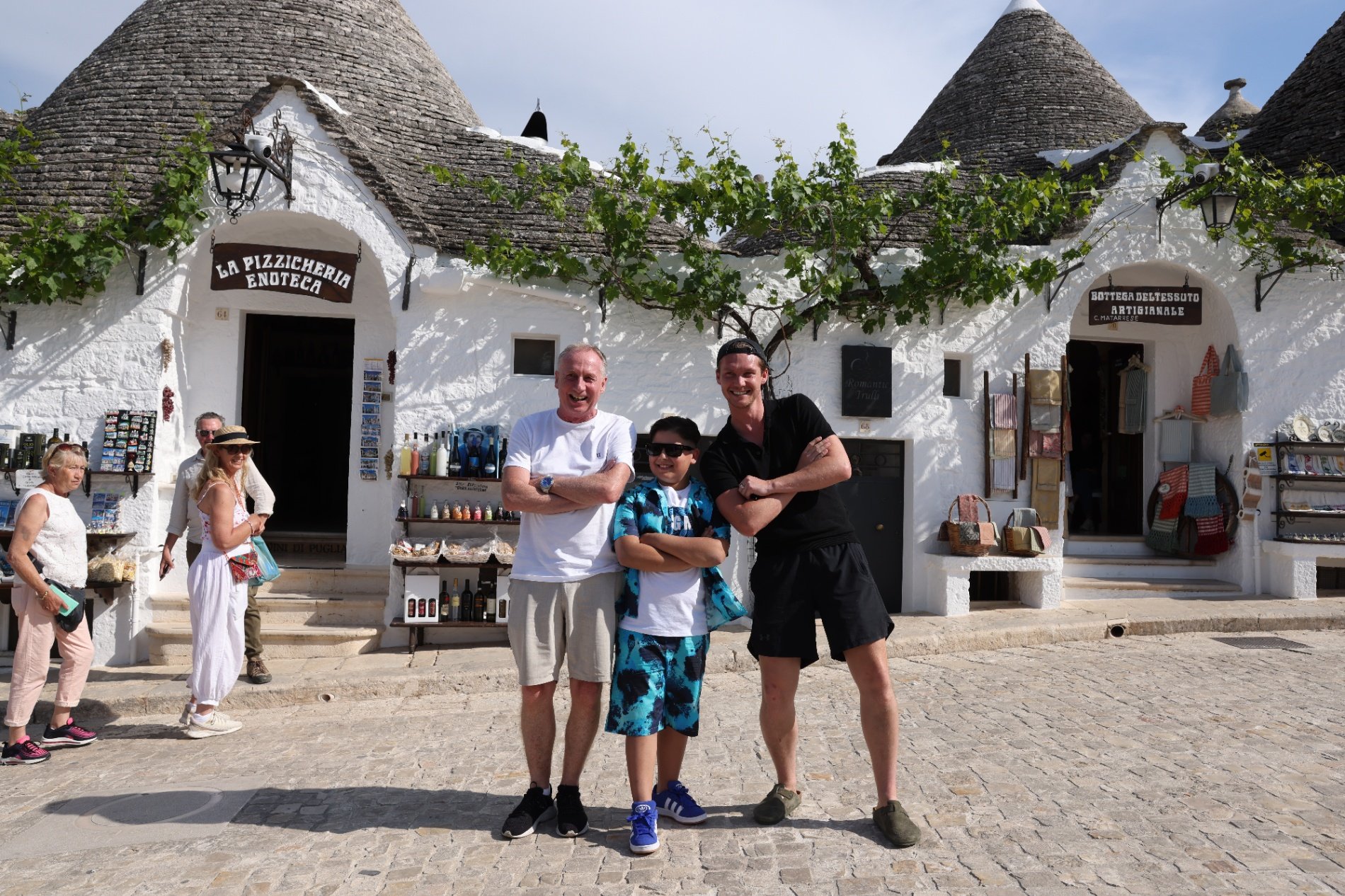
Somewhere around fifteen hundred trulli, roofed in grey limestone chiancarelle, walls kept white with lime that gets refreshed. From roughly ten in the morning to five in the afternoon in summer, those walls are not white, they are a light source. Expose for a face and the wall clips. Expose for the wall and the face turns to mud. There is no compromise that looks good. Before nine and after six the same wall reads cream, the roofs go blue-grey against it, and the town becomes photographable.
Rione Monti and Aia Piccola are not the same place
Monti is the postcard slope: about a thousand trulli, and nearly every one at street level is now a shop. Get there before the shutters go up and the display racks come out and it looks like a village. At eleven it looks like a market.
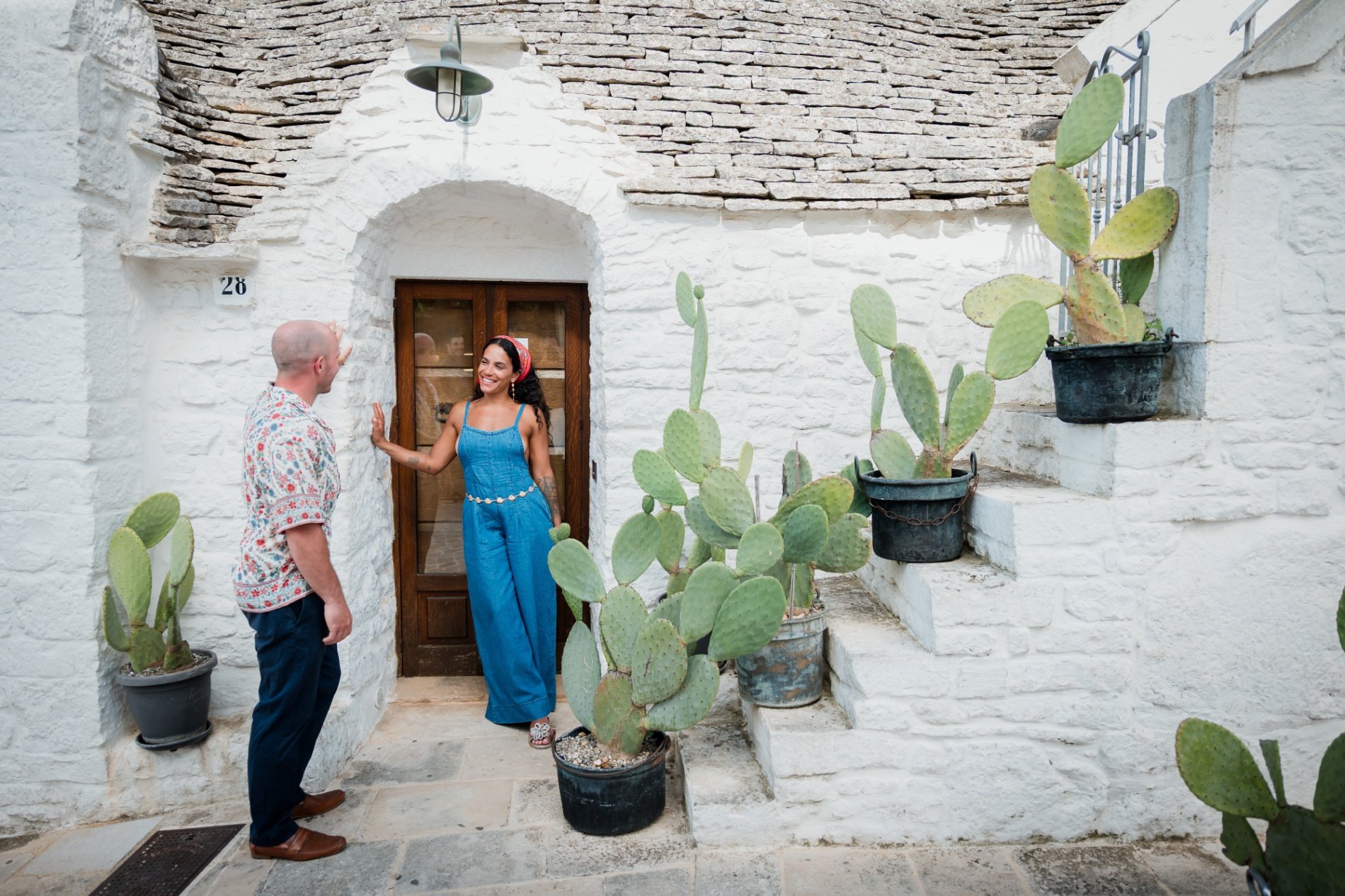
Across Largo Martellotta, Aia Piccola has around four hundred trulli and people still live in them. Laundry, cats, a chair outside a door. It stays quiet even in August. You can work there at any hour, but keep your voice down and do not put a lens through an open doorway. Nobody has ever objected to me working in Aia Piccola, and that is because of how the work was done, not because it is a free-for-all.
The Belvedere Santa Lucia gives you the roofscape across Monti. In the morning the sun is behind you and the cones are lit frontally, every roof separated from the next. Toward evening you are working into the light and the same view goes graphic and dark, which is a different and often better picture if you want silhouette. When the sirocco blows the air goes milky and that long view is not worth climbing for; stay in the lanes and work close instead. At the top of Monti stands Sant'Antonio, a church built in the nineteen-twenties in the shape of a trullo, and the climb empties out after half past six.
Things that go wrong
- The lanes are steep and the stone is polished smooth. Heels do not work here, and I say that having watched it go wrong.
- Trullo interiors are dark: one small window and a cone that swallows light. If a shopkeeper waves you in, you want a fast prime.
- Coaches from Bari and Brindisi start arriving mid-morning and are largely gone by five.
- The trulli districts are pedestrian and parking is paid, outside them.
- Assume drones are not happening.
- The train from Bari is the Ferrovie del Sud Est line, roughly an hour and forty, and thin on Sundays. Drive if you can.
More on the town: Alberobello.
The geography that sells the trip
| From | To | Drive |
|---|---|---|
| Alberobello | Locorotondo | 15 min |
| Alberobello | Martina Franca | 20 min |
| Alberobello | Ostuni | 40 min |
| Alberobello | Polignano a Mare (Adriatic) | 35 min |
| Alberobello | Taranto (Ionian) | 50 min |
| Lecce | San Cataldo (Adriatic) | 20 min |
| Lecce | Gallipoli (Ionian) | 50 min |
| Lecce | Alberobello | 1 h 30 |
Both seas are inside an hour of either base. That is the real argument for Puglia: baroque stone before breakfast and a beach at sunset, without hurrying either. Forty minutes from Alberobello, Ostuni is white on a hill and more dramatic than Alberobello itself. Locorotondo is fifteen minutes away, roofed in pitched cummerse rather than cones, and has almost nobody in it.
What clients say about this kind of shoot
We couldn't be happier with our experience with Mirko. The photos are absolutely stunning and without a doubt the best we've ever received. Every image feels natural, emotional, and beautifully composed. Mirko has an incredible eye for capturing genuine moments and turning them into memories we'll treasure forever. Beyond his talent, he's a wonderful person to work with: kind, passionate, professional, and able to make you feel completely comfortable in front of the camera. His passion for photography truly shines through in every shot. If you're looking for someone who doesn't just take beautiful photos but tells your story through his lens, we can't recommend Mirko highly enough. Thank you again for giving us memories that will last a lifetime!
— Svetoslav K. on Mirko A.
Hello Stefano! It's wonderful to hear from you! Thank you so much for making our big day so special and for getting such wonderful photos. We couldn't have asked for a better photographer! We appreciate you so much and hope that all is well for you. If we have any friends that are in need of a photographer we will definitely be recommending you to them! You are a great artist! All love to you!
— Sophia & Tanner on Stefano C.
We had the absolute pleasure of doing a couple’s shoot in Lecce with Mirko and his partner Martina, and it was one of the highlights of our trip to Italy. From the moment we met, they made us feel completely at ease—natural, relaxed, and totally ourselves. And it shows in the photos. Mirko has been in the photography world his whole life, and it’s clear he has an unmatched instinct and eye for capturing the perfect shot. Nothing felt forced or overly posed—just real, candid moments that beautifully reflect who we are and the connection we share. We’re still blown away by the vibe and essence of the images—they bring us right back to that golden evening in Lecce. Every time we look at them (along with memories of caffè leccese and pasticciotto 😄), we feel the same joy all over again. Grazie mille, Mirko. You are a true artist, and we can’t wait to cross paths again someday. – Mark & Kaylin
— Mark R. on Mirko A.
Top-notch service! We couldn't have chosen a better photographer! From our very first meeting he proved to be professional, polite, helpful and completely trustworthy. He knew how to put us at ease, capturing every moment naturally and with attention to detail. The photos are wonderful and perfectly convey the emotions of the most beautiful day of our lives. Thank you from the bottom of our hearts for your helpfulness, your kindness and for giving us memories we will treasure forever. Highly recommended!
— Matteo on Luigi P.
We chose Luigi as the photographer for our evening wedding at Masseria La Cornula and we were thrilled with his work. Despite the rain shortly before the ceremony, Luigi managed to capture the magic of the moment with a truly unique sensitivity. The photos taken after the rain are among the most beautiful: light, reflections and atmosphere brought out in an extraordinary way. Professional, discreet and always attentive to every detail, he told the story of the day in a style that is natural yet refined, never forced. Every shot lets us relive the emotions of that evening. We recommend him with all our hearts to anyone looking not just for a photographer, but for a true storyteller of special moments.
— Marco on Luigi P.
Exceptional photographer We found Dalila right here on this app; we liked her straight away and decided, as soon as the meeting was over, that she would be our photographer. She's kind, accommodating, attentive to every request and puts you at ease at every moment. She works with her dad and other collaborators who, just like her, make every shot enjoyable. We love simplicity, collaboration, trust, friendliness and lightheartedness, and with them we found all of that! Today our journey with them comes to an end; they've delivered our album and video and... we couldn't be happier. Without even trying, she sensed all our wishes, and what she delivered even went well beyond our expectations. We're so happy we chose Dalila and her team, and we'll keep doing so for birthdays, christenings, communions. Heartfelt thanks from Manuel and Francesca
— Francesca on Dalila G.
Heat, without the euphemisms
Inland Puglia reaches 35 to 40 °C by early afternoon in July and August, and the Itria valley has no sea breeze to give any of it back. Alberobello's 430 metres of altitude help in the evening and not at all at two o'clock. Lecce is worse in its own way: the stone soaks up the day and radiates it until midnight. May, June, late September and October are the months to shoot. If you are locked into August, then 06:30 to 09:00, or 18:30 to sunset. Nothing in between is worth carrying a camera for.
One thing visitors consistently get wrong: Puglia is the far east of Italy, so sunrise and sunset both arrive roughly twenty-five minutes earlier than in Rome. In mid-June the sun is down by about half past eight. By the middle of October it is gone by twenty past six. Plan against the sun, not the clock.
How much time you need
- One hour, from EUR 460. One location done properly. Piazza del Duomo at blue hour, or Rione Monti at half past seven in the morning.
- Two hours, from EUR 690. Lecce end to end: Santa Croce, the amphitheatre, the quiet streets, finishing in the cathedral square as the lights come on. Or both districts of Alberobello with the belvedere in between.
- Three hours. Alberobello plus Locorotondo, or Lecce plus the Adriatic at San Cataldo.
Those are all-in totals, nothing added afterwards.
If you only get one morning in Alberobello, set the alarm for six. At quarter to seven the town is empty, the light comes in sideways along the lanes, and you will be finished and drinking coffee before the first coach has parked.
Frequently asked questions
Can you photograph Lecce and Alberobello in one day?
Possible, and usually a mistake: the two towns are 110 kilometres and about an hour and a half of driving apart, and doing both in one day means taking the worst light in each. Give each one its own morning or its own evening. If you only get one morning in Alberobello, set the alarm for six – at quarter to seven the town is empty and the light comes in sideways along the lanes.
When is the best light for photos in Alberobello?
Before nine in the morning and after six in the evening. In between, from roughly ten to five in summer, the whitewashed trulli walls are a light source: expose for a face and the wall clips, expose for the wall and the face turns to mud. In the edge hours the same wall reads cream and the grey roofs separate against it, and the coaches from Bari and Brindisi are largely gone by five.
Which months are best for a photoshoot in Puglia?
May, June, late September and October. In July and August inland Puglia reaches 35 to 40 °C by early afternoon and Lecce's stone radiates the heat until midnight; if you are locked into August, shoot 06:30 to 09:00 or 18:30 to sunset. Remember that Puglia is the far east of Italy, so sunrise and sunset both arrive roughly twenty-five minutes earlier than in Rome.
Want professional photos in Alberobello?
Browse portfolios, compare packages, and book a verified local photographer in minutes.