Corporate and Team Photography in Italy
Most companies that ask for photography in Italy are really asking for one of four jobs. They rarely arrive labelled that way — the brief says "we need photos for the conference" — so the first useful step is deciding which of the four it is, because each wants a different amount of time, a different room, and a different set of permissions.
Four formats cover almost everything
The headshot station
A room, a backdrop, two lights, and a queue. This is the highest-value hour in corporate photography because it produces something the company keeps for years and can standardise across a whole org chart.
What it needs is space, not time. The minimum workable footprint is about four metres by four; five metres of depth is better, because you need roughly a metre and a half between the person and the background to keep their shadow off it and to let the background go soft. A 2.7 m backdrop covers standing shots. You need two accessible power sockets or battery packs, and one person from the company managing the queue outside the door — without that, throughput collapses.
Realistic throughput is ten to fifteen people an hour, not thirty. Two hours covers a leadership team. Half a day covers a floor. Send the wardrobe note three days before, not the morning of: solid mid-tones, no thin stripes, nothing white if the background is white, no logos other than the company's.
Event coverage
Conferences, awards, product launches, partner days. The variable that decides the quality of the take is not the camera, it is the agenda. Ask for it a week ahead, along with the five people who must appear in the gallery and the sponsor logos that must be legible somewhere.
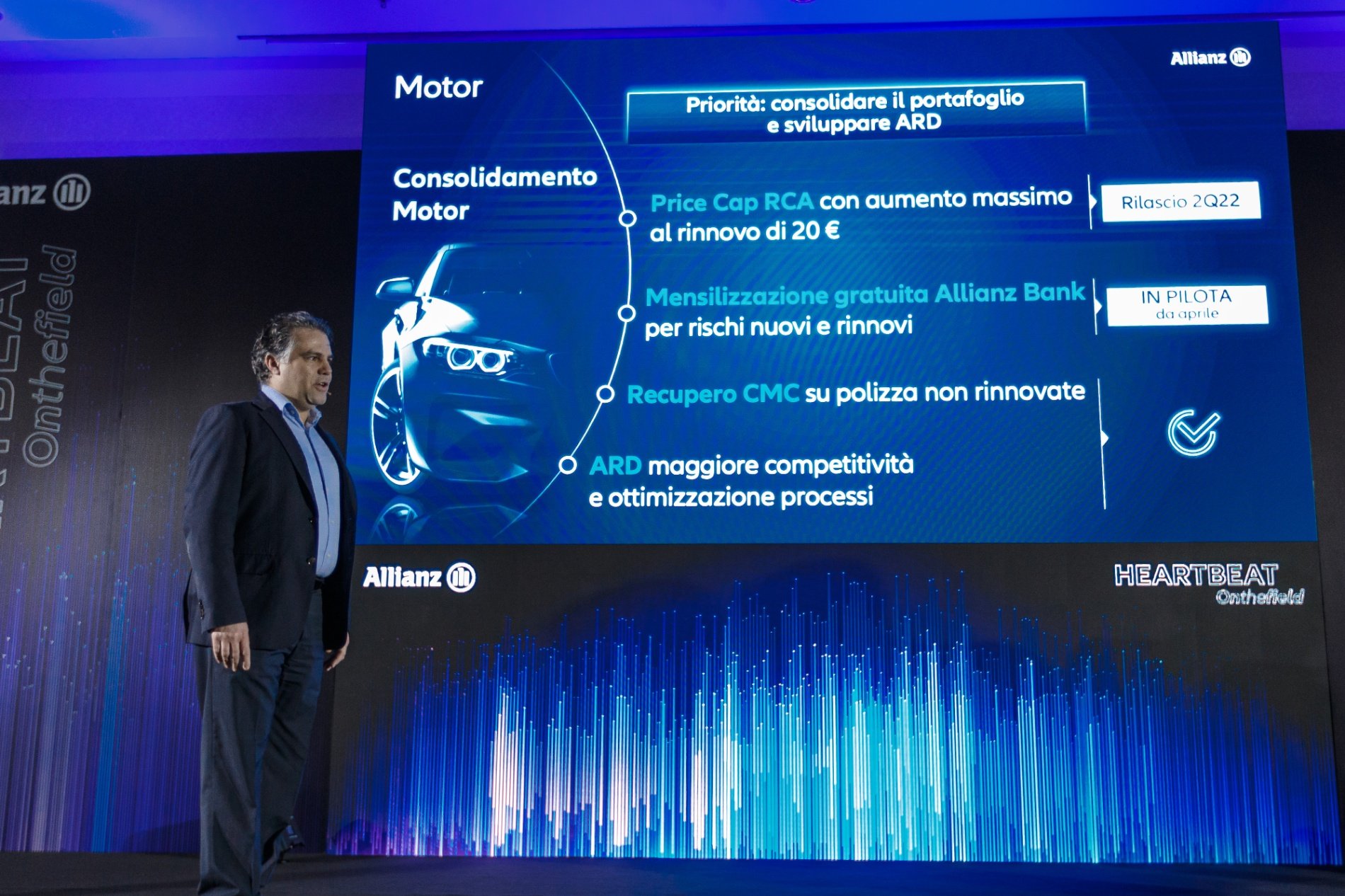
Flash during a keynote is out, so this is fast glass and high ISO. Expect the stage to be lit by a magenta-leaning LED wash with an LED wall behind the speaker — the wall is usually two stops brighter than the speaker's face, and you have to choose which one survives. Half the usable images of an event are made at the coffee break, not in the room.
Team portraits on location
Groups of eight or more need height difference: a staircase, a step, a slope. Allow twenty to thirty minutes for the first configuration and five for each variant after that, plus a weather fallback that everyone has agreed to in advance.
Permits matter here. A camera on a strap is fine almost anywhere; a tripod and light stands in an Italian public square invites a conversation about authorisation, and church and museum interiors are generally closed to commercial work. A private courtyard, a hotel terrace or the company roof removes the problem.
Content for the website
The slowest format and the one with the longest shelf life. It needs a shot list tied to actual pages — hero, about, careers, one image per product page, abstract texture frames, verticals for social — plus staff who agreed beforehand to be photographed working.
It also needs the office prepared: cables hidden, desks cleared, and screens dealt with. Live screens are both a visual and a legal problem, because they carry customer names, unreleased interfaces and moiré. Put a dummy build up, or turn them off. Half a day for a small office; a full day for two floors with interviews.
| Format | Time on site | Space it needs |
|---|---|---|
| Headshot station | 2 h to half a day | 4×4 m room, power, a queue manager |
| Event coverage | Follows the agenda | Access to stage, foyer, breaks |
| Team portraits | 45–90 min | Steps or a slope, weather fallback |
| Website content | Half to full day | Tidied office, screens handled |
Why Milan is the practical base
Milan is where most of this work already is: Porta Nuova and CityLife for corporate headquarters, Rho Fiera at the end of metro line 1 for trade fairs, the convention centre beside CityLife for congresses. Three airports feed it — Linate is eight kilometres from the centre and about twenty minutes by taxi, Malpensa runs a train to Cadorna and Centrale, Bergamo runs coaches.
The reason it works as a base is the rail network rather than the airports. High-speed trains put Bologna about an hour away, Florence and Venice roughly two, Rome around three, all city centre to city centre. A team photographing a Milan headquarters on Tuesday can cover a Rome office on Wednesday without a flight.
Rome is the right base when the work is institutional — ministries, trade associations, industry press. The formats are identical, but budget more travel time between venues and expect stricter answers about photographing around public monuments.
One calendar warning: design week in April and the fashion weeks compress hotel and photographer availability at once. Book those months earlier than feels necessary.
The paperwork that actually matters
NDAs. Ask for it early and sign it before travelling, rather than on a laptop in the lobby. Agree at the same time which rooms are off-limits, whether behind-the-scenes posting is allowed (assume not), and who on the client side approves which frames leave the building.
Consent for staff photographs. Italian law protects a person's image: a portrait generally may not be published or used commercially without the subject's consent, with limited exceptions such as public figures, people holding public office, and events of genuine public interest. Data protection rules sit on top of that — employees are identifiable individuals, the company needs a lawful basis, and consent asked of your own staff gets read sceptically precisely because saying no to an employer is awkward. I am not the person who drafts that notice and none of this is legal advice; the company's own counsel writes it. What works operationally is a written notice a few days ahead plus an opt-out list handed to the photographer that morning. For conferences, a clear sign at registration and a differently coloured lanyard for people who do not want to be photographed is the only system I have seen hold up in a busy foyer.
Usage rights and who owns the files. Settle this in writing before the shoot, not when the invoice arrives. Italian copyright law does not simply hand everything to whoever paid the invoice: it treats a creative photographic work differently from a plain record shot, employment and commission each carry their own rules, and the gap between them is filled by whatever the contract says — which is the argument for making the contract say it. Name the media, the territories, the duration, whether press and partner companies may republish, and whether a full buyout is included. A buyout is perfectly possible, it is a different price, and it should be written down as such rather than assumed. Delivered files are edited, colour-corrected and supplied in web and print sizes. Raw files are not a normal deliverable and should be a separate conversation if the company genuinely needs them.
Photo Italy for Business
Photography for your company, handled end to end
One brief, hand-picked vetted photographers, one contract and one invoice. Quotes within one business day.
Request a business quoteRooms with no daylight
Hotel ballrooms, basement congress halls, windowless boardrooms and any office with a 2.6 m suspended ceiling all mean the same thing: whatever light exists is yours to bring. Black ceilings and dark walls kill bounce, so plan on direct light through a modifier and on floor space for stands. Budget forty-five minutes for setup, ask where the power is, and check whether the venue requires taped-down cables.
Mixed sources are the other tax. Tungsten house lights, green-tinted fluorescents and an LED wall in one frame will not neutralise with a single white balance, so someone has to decide which source is telling the truth about skin.
The headshot station is unaffected by any of this — it is fully lit anyway, and a windowless room is arguably easier. What a dark room destroys is the candid working look, which cannot be faked without lighting it deliberately.
Deadlines that match a press cycle
If a press release is attached to the event, the delivery schedule changes how the day is staffed. A workable standard is a handful of selects within two or three hours for same-day social and press, thirty to sixty edited frames by the next morning, and the full gallery in three to five working days. Same-day delivery means an editor on site with a laptop and a card reader, and a deliberately lower ISO ceiling so the frames need less cleanup. Agree it beforehand: it is a staffing decision, not a favour.
Booking and time
Rates are all-in and set by the photographer: an hour starts at EUR 460. One hour is a leadership headshot session or a short launch; two to three hours covers most single-office jobs. Multi-day conferences, city-to-city rollouts and anything with a large crew are scoped as a quote rather than by multiplying the hourly rate — send the agenda and the deliverables list through the business photography page and it comes back as a plan with times, space requirements and a delivery date attached.
Frequently asked questions
How many people can a headshot station photograph per hour?
Realistic throughput is ten to fifteen people an hour, not thirty; two hours covers a leadership team and half a day covers a floor. The room needs a footprint of at least four metres by four, two accessible power sockets or battery packs, and one person from the company managing the queue outside the door. Send the wardrobe note – solid mid-tones, no thin stripes, nothing white against a white background – three days before.
Do you need staff consent for corporate photos in Italy?
Italian law protects a person's image: a portrait may not be published or used commercially without the subject's consent, and data protection rules sit on top of that, so the company's counsel drafts the notice – none of this is legal advice. What works operationally is a written notice a few days ahead plus an opt-out list handed to the photographer that morning. For conferences, a clear sign at registration and a differently coloured lanyard for anyone who does not want to be photographed works in a busy foyer.
How fast can event photos be delivered for press?
A workable standard is a handful of selects within two or three hours for same-day social and press, thirty to sixty edited frames by the next morning, and the full gallery in three to five working days. Same-day delivery means an editor on site with a laptop and a card reader and a deliberately lower ISO ceiling, and it has to be agreed beforehand – it is a staffing decision, not a favour.
Want professional photos in Milan?
Browse portfolios, compare packages, and book a verified local photographer in minutes.