Photographing Sicily: Taormina, Palermo and Syracuse
Sicily is sold as one destination and photographed as three. Taormina is a balcony: elevation, a volcano, a sea that changes colour twice an hour. Palermo is a working city that refuses to pose. Syracuse — Ortigia, really — is a light box built out of limestone. Pick the wrong one for your session and you spend the hour arguing with the place.
Real shots from Taormina
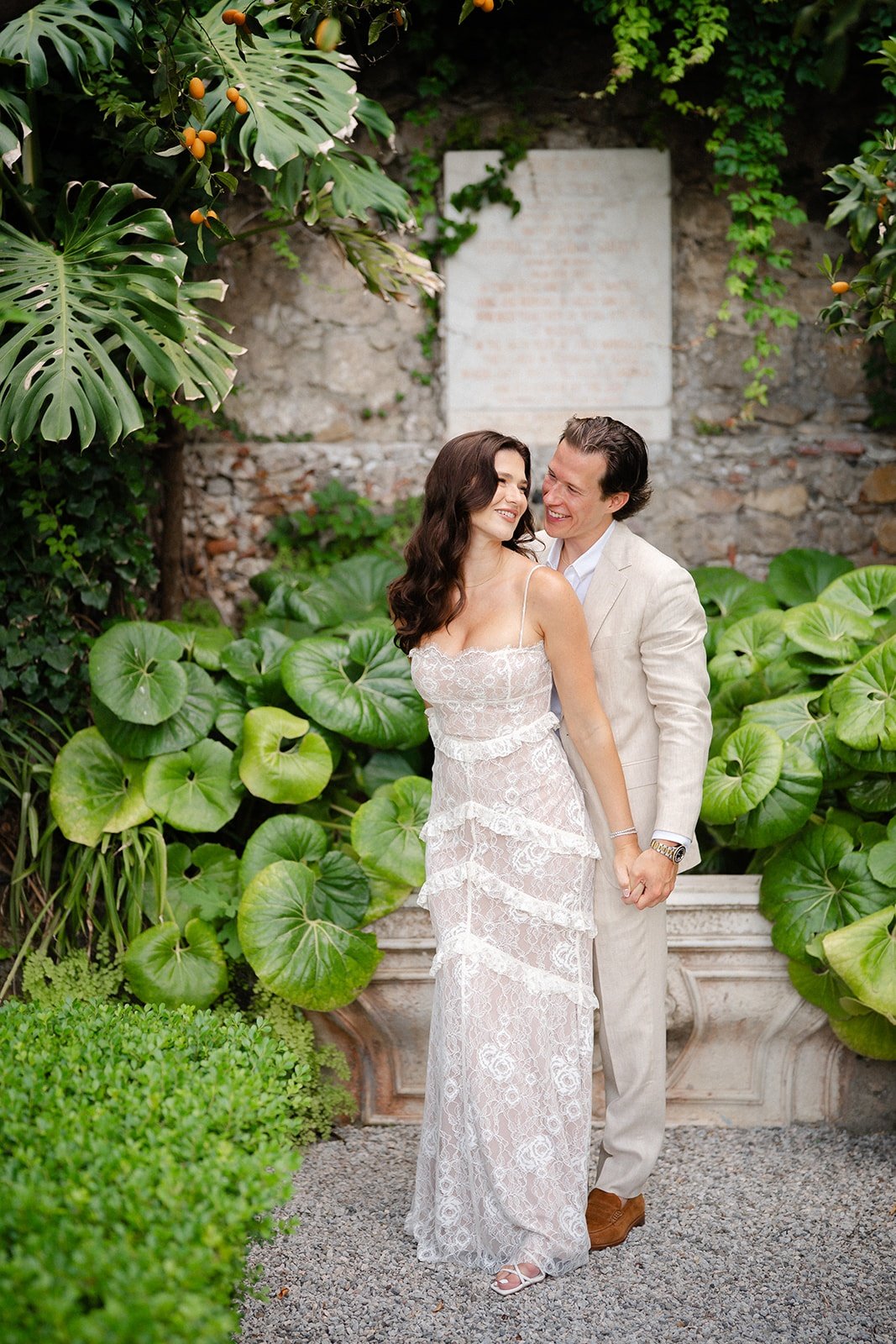
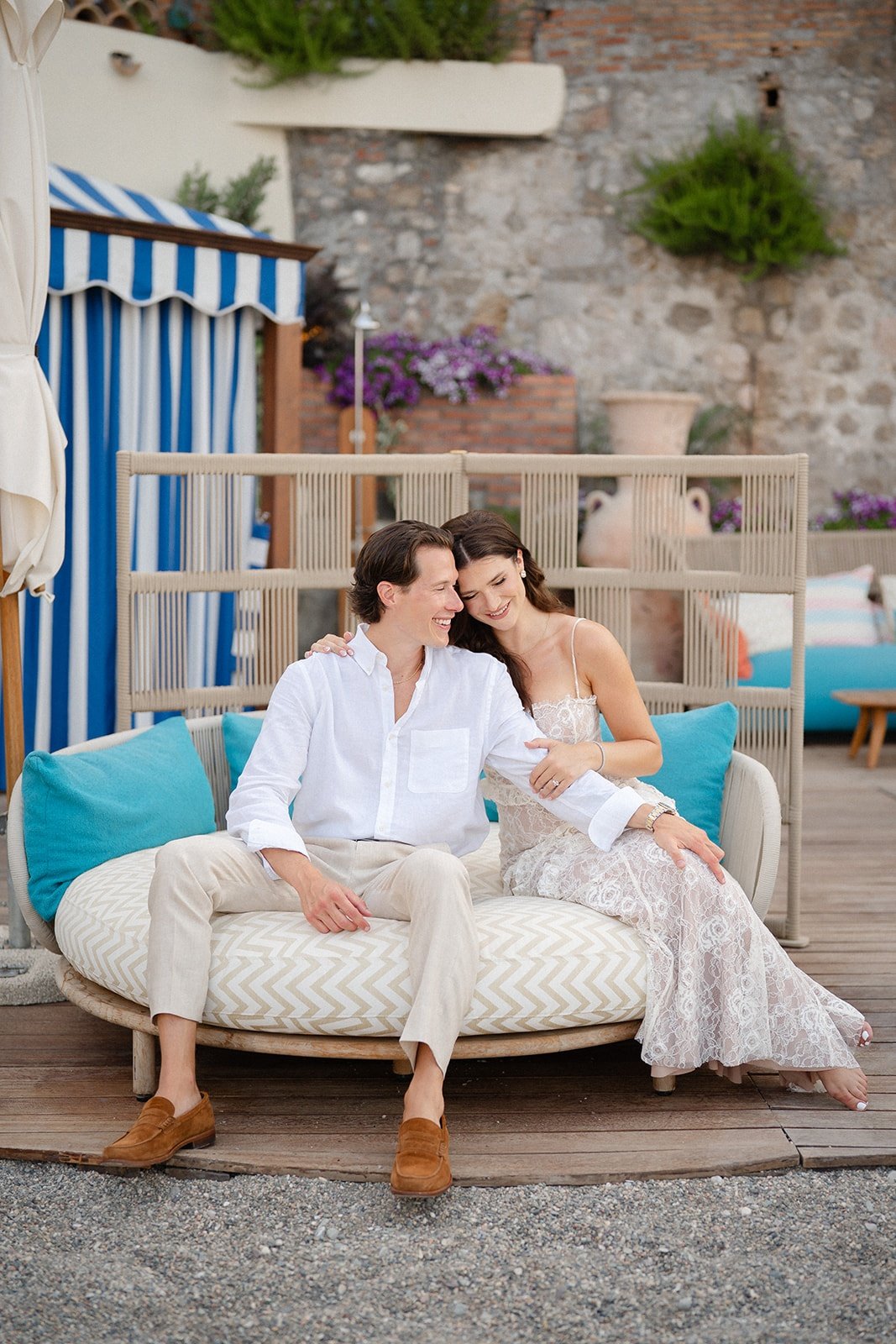
Taormina: the view does the work, if you are early
The Teatro Antico is what people come for: the broken brick of the scena, and through the gap in it, Etna. It delivers, with conditions, and the first is the hour.
Etna sits southwest of the theatre and it hides. Haze and the cloud cap build through the day, so by four on a summer afternoon the volcano is a grey suggestion inside the arch rather than the mountain you were promised. Mornings are cleaner. The gate opens at nine, and for the first half hour the upper cavea is close to empty; the coaches up from Catania and the cruise groups bussed over from Messina land between ten and half past. The theatre without other people's shoulders in it is a nine o'clock shot, not a golden hour one. Work three or four rows up: from the orchestra floor the standing brick closes over the volcano.
Piazza IX Aprile is the opposite case: public, free, open at any hour, black and white chequerboard paving, a parapet with the bay of Naxos below it and Etna away to the right. It faces east, which makes it a sunrise location and a poor sunset one — by evening the sun is behind the town and the terrace sits in flat shade. At half past six on a June morning it is yours. At six in the evening it is a wall of café tables and an accordion.
Isola Bella lies below — cable car from Via Pirandello down to Mazzarò and eight minutes along the road, or the switchbacks on foot in twenty-five. The island itself is a ticketed nature reserve with a fixed closing time; the pebble beach facing it is public, with paying lidos either side. The spit joining the two goes under whenever the sea comes up. The bay faces east, so again: morning. By eleven in July it is sunbeds edge to edge.
The centro is a ZTL, so park at Lumbi and take the shuttle. Corso Umberto is 800 metres of polished stone end to end, which matters if there is a long dress and a heel involved.
Palermo: reportage, not monuments
Palermo punishes the postcard approach. The great interiors — the Palatine Chapel, the cathedral, Monreale — are ticketed, crowded and closed to anything resembling a production. What the city gives instead is street reportage of a kind no resort town can offer.
Ballarò runs from seven in the morning to about two, Monday to Saturday, and peaks between eight and ten. It is narrow and roofed in tarpaulin, so light arrives in slots: hard shafts and deep shade, never an even wash. Expose for the shaft and let the rest go. Buy something before you lift the camera, and ask the fishmonger rather than shooting past him — most say yes, and the ones who say no mean it. The abbanniata, the shouted sales cry, is the sound of the place, not a pose to request.
Vucciria is half dismantled by one o'clock in daylight, then turns into an open-air bar after nine at night: a real shoot, but a harder one — high ISO, mixed neon, someone crossing your frame every four seconds. Il Capo sits between the two and has the tightest alleys.
The courtyards are what visitors miss. Behind the doors on Via Alloro, Via Butera and through the Kalsa are cortili with a palm tree, failing stucco, an external staircase and one shaft of light down the well. Many are private. The ones that work are semi-public: an open portone, a word with whoever is sitting inside, five quiet minutes.
The Foro Italico at sunset needs an honest note: the lawn runs along the water on the seaward side of the old town, and that water is to the east, so the sun sets behind the city, not over the sea. Direct light leaves faces around twenty-five minutes before the published sunset time, when it drops behind the Kalsa roofline, and what follows is twenty good minutes of pink over the gulf with Monte Pellegrino to the north. Do the backlit work earlier, in the streets, and keep the Foro for the soft end. One date to avoid unless you want it: 14 and 15 July, when the Festino di Santa Rosalia gives the seafront to the procession.
Syracuse: Ortigia is one big reflector
Ortigia is built of pale local limestone, cream at midday and honey after six. Syracuse is the easiest of the three to photograph people in, and Piazza del Duomo is why: a long closed square of that stone, the cathedral facade taking the low western light and throwing it back across the paving at whoever stands in the middle. Shadows fill in by themselves. Nobody needs a panel held in their face, which matters if the person in front of the camera is nervous.
The square empties in the heat between half past one and three, then refills at seven for the passeggiata. The window is the last forty-five minutes of light.
Fonte Aretusa, with its papyrus, faces west across the Porto Grande — the one spot in these three cities where you can put the sun itself behind two people. It drops behind the low far shore rather than a clean horizon, so you get the disc over water instead of waiting for a sea-level sunset that never comes. The Lungomare di Levante is a six-minute walk across the island and faces east for sunrise. Castello Maniace at the tip keeps short and changeable hours, so check on the morning itself.
Ortigia is a little over a kilometre end to end and flat. Two hours covers the Duomo, the Aretusa, an alley run through the Giudecca and the waterfront without moving a car. Park at Talete and walk in. One date to know: 13 December, Santa Lucia, when the island belongs to the procession.
Which city for which session
| Session | Where | Why |
|---|---|---|
| Proposal | Taormina | Parapet, volcano, nowhere for the moment to hide |
| Elopement or small wedding | Syracuse | Flat, walkable, forgiving light, a formal square with no permit |
| Couples portraits | Syracuse first, Taormina second | Ortigia flatters, Taormina impresses |
| Family with small children | Syracuse | Car-free, short distances, midday shade |
| Documentary or content | Palermo | Movement, colour, food, texture, real faces |
| Solo portrait | Palermo | Backgrounds with grain |
| Honeymoon | Taormina | Reads instantly as Sicily |
For a couples session, the tiebreak is blunt: Ortigia if you want to look good, Taormina if you want the pictures to be recognisably Sicily, Palermo if you want them to be about you rather than the backdrop.
What clients say about this kind of shoot
Wonderful experience! We loved having Marco as the photographer for our special day. He and his son had such warmth about them and made us feel comfortable. The delivery of the photos was so quick and we absolutely love the outcome! He captured all the smiles, tears, laughter and love while being so professional, gentle and discreet. We had a bit of a language barrier which made the interactions even more fun. He was supportive through all our requests with a smile on his face. Grazie Marco! Thank you for being a part of our wedding and blessing us with your talent!
— Neriana F. on Marco M.
My husband and I are simply blown away by how amazing the photos of our wedding in Tuscany turned out! They are unique, artistic, truly special and edited to perfection. We loved working with them and highly recommend them to anybody getting married or having a special event in the area.
— Alexandra S. on Marco M.
Choosing Marco and his team for our wedding was one of the best decisions we could have made! A fantastic photographer, extremely good and professional. From the very first moment he made us feel completely at ease, and on the wedding day he was impeccable in every respect. He managed to catch emotions, details and spontaneous moments without ever being intrusive, telling the story of our day in an authentic, special way. The photos are wonderful and every time we look at them we're moved all over again, reliving those unique moments. We'd choose him a thousand times over!
— Barbara A. on Marco M.
Much more than a photographer — where his photographs end, the memories begin! I've known Marco Miglianti since I was a child. He photographed my First Communion and my Confirmation, so when the time came to choose a photographer for our wedding we had not the slightest doubt: we already knew it would be him. And today we can say with absolute certainty that we couldn't have made a better choice. From the very first meeting Marco won us over with his irresistible warmth, his humanity and his ability to put us completely at ease. He is a sunny, genuine person, always with a smile. On the morning of the wedding, as the emotion and the nerves were starting to bite, he managed to turn it all into laughter, calm and lightness. It was like having a family friend beside us. From the first moment Marco understood us perfectly, without our having to explain. We didn't want forced poses or staged moments; we simply wanted to live every instant spontaneously, without feeling watched or directed. With the discretion and sensitivity that set him apart, he managed to tell the story of our day exactly as it was: authentic and full of real emotion. With that same discretion and sensitivity he caught the knowing looks, the embraces, the tears of joy, the laughter and all those small details that often slip past but are the essence of such a special day. He never once asked us or our guests to interrupt a moment to pose, and precisely because of that, every photograph tells the truth of that day. When we received the photos we were deeply moved. We weren't simply looking at images: we were reliving our wedding. Every shot took us right back to that instant and those feelings, and made us feel something incredible. That is the greatest gift a photographer can give. Beyond his extraordinary sensitivity, Marco is an exceptionally well-prepared professional. You immediately sense his experience, his care for every detail and his ability to handle any situation calmly and confidently. Even his famous bride's emergency kit shows how nothing is left to chance and how much he genuinely wants everything to be perfect. Thank you from the heart, Marco, for telling the story of the most beautiful day of our lives with your enormous passion, your sensitivity and your infectious smile. You gave us authentic, timeless memories that we will keep in our hearts forever. If we could go back, we would choose you again. And we'd do it a thousand times over! Martina & Florian
— Martina B. on Marco M.
Marco and his whole team shot my wedding and I was genuinely struck by their professionalism and by the beauty of the photos they took for us! Ours tell every moment of our wedding perfectly — shot after shot they gathered up our entire day! ❤️ Heartfelt thanks to Marco and all his team.
— Irene on Marco M.
I came across Marco's photos by chance on Instagram, even before I met my wife. His photographic style stayed with me until, a year ago, the moment finally came to contact him — successfully — for my wedding. Marco, his wife and his son are fantastic; you can see they love their work and do it with passion. They made us all feel at ease, creating a relaxed atmosphere and capturing, discreetly but attentively, truly every instant, with an artist's eye and a great deal of heart. The result of their work is the photos and the video we had dreamed of… beautiful memories we will keep forever.
— David B. on Marco M.
Season, and the August problem
April to mid-June, and mid-September through October. May and October are the two months where light, temperature and crowd cooperate at once.
August is at capacity in every sense: the theatre fills by mid-morning, Ortigia is at thirty-five degrees by one, the light stays hard until half past seven, and everything from a parking space to a café table is contested. The week around Ferragosto, 15 August, is the peak of the peak. If August is your only window, shoot at sunrise and mean it — up at five, done by eight.
Scirocco is the other summer problem: Saharan dust comes north, Etna disappears into haze and the sky goes flat white. Nothing to do but work tighter and let go of the wide volcano frame. Winter is underrated in Palermo, with low sun straight down the streets and markets with no tourists in them, and unreliable in Taormina, where cloud sits on Etna for days.
Permits, and which rules get enforced
The Parco Archeologico Naxos Taormina governs both the Teatro Antico and Isola Bella, charges for professional shoots and does enforce the ban on tripods. The line staff draw is visual: a couple walking with one photographer and one camera reads as tourism and passes; a gown, an assistant, a stand and a reflector reads as a production and gets stopped at the gate. Apply in advance and in writing if that is your session. From June to September the theatre also loses part of its season to festival staging, and the seating rig sits inside exactly the frame you came for.
Streets in Palermo and Ortigia are public and need no permit for a walking session. Church interiors are a separate conversation with the parish. Drone flying is restricted over all three historic centres.
Logistics and cost
Catania airport serves Taormina, fifty minutes away, and Syracuse, an hour. Palermo has its own. Palermo to Taormina is three hours by car, Taormina to Syracuse ninety minutes. Do not try to shoot two of the three in one day.
Sessions start at EUR 450 for one hour and EUR 680 for two, all in, or from EUR 405 through Quick Booking. One hour covers a single spot. Two hours is the realistic minimum for a walking session across a centro storico. Three suits Palermo, where the market half and the sea half are twenty-five minutes apart on foot and you want both.
Frequently asked questions
When can you see Etna from the Teatro Antico in Taormina?
In the morning: haze and the cloud cap build through the day, so by four on a summer afternoon the volcano is a grey suggestion inside the arch. The gate opens at nine and for the first half hour the upper cavea is close to empty, before the coaches from Catania and the cruise groups from Messina land between ten and half past. Work three or four rows up from the orchestra floor.
Which Sicilian city is easiest for a couples photoshoot?
Syracuse, meaning Ortigia: Piazza del Duomo is a long closed square of pale limestone whose cathedral facade throws the low western light back at whoever stands in the middle, so shadows fill in by themselves. The window is the last forty-five minutes of light, before the square refills at seven for the passeggiata. Taormina impresses; Palermo gives reportage rather than a backdrop.
What are the best months for a photoshoot in Sicily?
April to mid-June and mid-September through October; May and October are the two months where light, temperature and crowd cooperate at once. August is at capacity – Ortigia hits thirty-five degrees by one, the light stays hard until half past seven, and the week around Ferragosto is the peak of the peak. If August is your only window, shoot at sunrise: up at five, done by eight.
Want professional photos in Taormina?
Browse portfolios, compare packages, and book a verified local photographer in minutes.